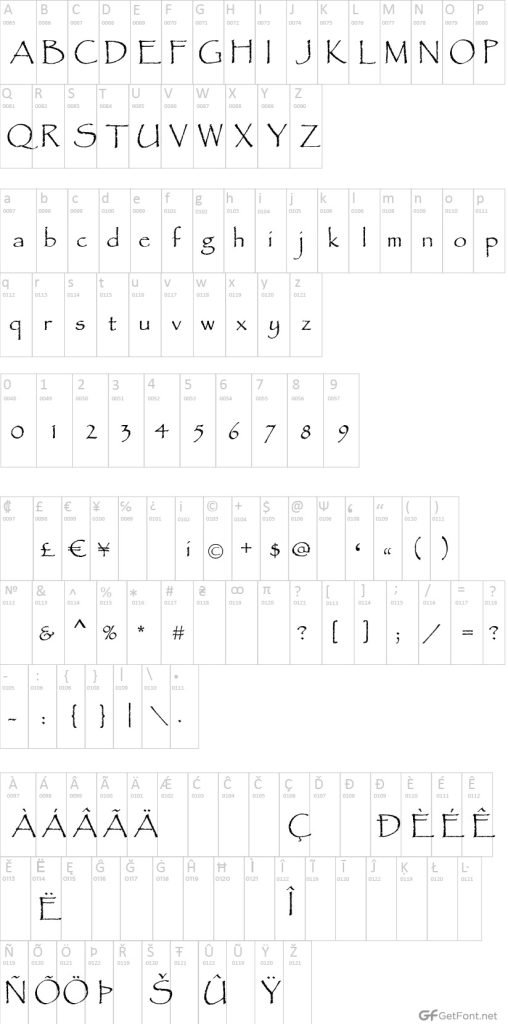
You've seen it everywhere, from movie posters to artisanal coffee shop menus – that distinctly organic, handcrafted look of Papyrus font. Its unique charm, inspired by ancient scrolls and hand-drawn script, gives any text a touch of warmth and gravitas. But beyond its aesthetic, Papyrus was ingeniously designed to enhance readability and reduce eye strain, making it a surprisingly practical choice for certain applications. If you're ready to harness its blend of elegance and clarity for your own projects, whether on your desktop or across the web, you're in the right place.
This guide cuts through the technical jargon to give you a clear, actionable path to downloading and installing Papyrus, ensuring your designs communicate with both style and ease.
At a Glance: What You'll Learn
- Understanding Papyrus: A quick dive into why this font is so distinctive and beneficial.
- Where to Find It: Reliable sources for a free and legitimate download.
- Desktop Installation: Step-by-step instructions for Windows and macOS.
- Web Integration: How to get Papyrus working seamlessly on your websites.
- Best Practices: How to use Papyrus effectively for maximum impact and readability.
- Troubleshooting: Quick fixes for common installation issues.
Papyrus Unveiled: Why This Font Matters (and Where It Came From)
Designed by Chris Costello in the 1980s and initially released by Agfa Monotype, Papyrus is more than just a quirky typeface. Its distinctive curved lines, rounded edges, and unique letterforms were deliberately crafted to evoke a sense of ancient history and natural elegance, while simultaneously prioritizing user comfort. The goal? To reduce eye strain and stress, making digital text feel more approachable and "human."
Think of Papyrus as the friendly, wise old sage of fonts. It aims for a clear, warm tone that builds trust and reduces reader fatigue. And here's the best part: it's completely free for both personal and commercial use, and designed to work consistently across various devices and platforms.
The Papyrus Family: Weights for Every Whisper and Roar
Like any good font family, Papyrus offers variations to suit different needs:
- PAPYRUS Regular: This is your everyday workhorse. It's fantastic for main paragraphs, emails, and any body text where clarity, friendliness, and easy readability are paramount.
- PAPYRUS Bold: When you need to make a statement, Papyrus Bold steps in. Ideal for headlines, important points, or calls to action, it projects confidence, strength, and reassurance without being overbearing.
- PAPYRUS Light: For those delicate touches – quotes, captions, side notes, or subtle design elements – Papyrus Light offers a gentle, airy, and thoughtful presence.
Where Papyrus Shines (and Where It's Best to Step Aside)
Its unique character makes Papyrus particularly effective in specific contexts:
- Headlines & Titles: Its distinctive look instantly grabs attention and adds an air of sophistication. Imagine it gracing a book cover, movie title, or a compelling presentation slide.
- Logos & Branding: For businesses aiming for an organic, artisanal, or historically-inspired aesthetic, Papyrus can be a powerful choice.
- Short Blocks of Text: Think personal blogs, business websites, presentations, or guides where you want to convey a warm, clear tone without overwhelming the reader.
However, its very distinctiveness also presents a limitation: - Avoid for Extensive Body Text: While engineered for readability in short bursts, Papyrus's unique design can become challenging and even tiring to read over long periods. For lengthy articles or documents, pair it with a more conventional, neutral serif or sans-serif font for the main body.
Your First Step: Downloading Papyrus Font for Desktop
Getting your hands on Papyrus is surprisingly straightforward, thanks to its widespread availability and open licensing. The key is to find a reliable source.
Finding Trustworthy Font Download Sites
When searching for "Papyrus font" or "Papyrus font free download," you'll encounter numerous websites. Here are some reputable options known for offering legitimate and safe font files:
- Font Squirrel: Known for its high-quality, commercially-friendly fonts.
- DaFont: A vast archive of free fonts, often including Papyrus.
- 1001 Free Fonts: Another popular destination for various free typefaces.
- SafirSoft: Often hosts official or widely-accepted free versions of popular fonts.
A Crucial Check: Always Review Licensing!
While Papyrus is generally free for both personal and commercial use, it's a golden rule to always review the licensing agreement on the specific website you download from. This small step ensures you're fully compliant, whether you're using it for a school project or a client's major campaign. Most reputable sites make this information easily accessible near the download button.
The Download Process: What to Expect
Once you've chosen a reputable site and confirmed the licensing, the download process usually involves these steps:
- Locate the Download Button: It's typically prominent, often labeled "Download" or "Download Font."
- Save the File: Your browser will prompt you to save a file. Most fonts come compressed in a
.ziparchive. - Extract the Font File:
- Windows: Right-click the
.zipfile and select "Extract All..." Choose a destination folder (your Downloads folder is usually fine), and click "Extract." - macOS: Simply double-click the
.zipfile. It will automatically create a new folder containing the font files in the same directory.
Inside the extracted folder, you'll typically find one or more files with extensions like.ttf(TrueType Font) or.otf(OpenType Font). These are your actual font files, ready for installation.
Bringing Papyrus to Life: Installing on Your Desktop
With the Papyrus font files safely downloaded and extracted, the next step is to install them on your operating system. This makes the font available to all your desktop applications, from word processors like Microsoft Word to graphic design software like Adobe Photoshop or Canva desktop app.
Installation for Windows Users
Windows provides a couple of straightforward ways to install fonts:
- The Quick Double-Click Method (Recommended for single fonts):
- Navigate to the folder where you extracted the Papyrus font file(s) (e.g.,
Papyrus.ttf). - Double-click on the
.ttfor.otffont file. A preview window will open, showing you how the font looks. - In the preview window, you'll see an "Install" button. Click it.
- Windows will quickly install the font, and the button will grey out or disappear once complete.
- Using the Control Panel (Good for multiple fonts or advanced management):
- Open the Control Panel. You can find it by searching "Control Panel" in the Windows search bar.
- Change the "View by" option (usually in the top right) to "Large icons" or "Small icons" to see all options.
- Find and click on "Fonts" (it might be under "Appearance and Personalization" first).
- In the Fonts window, you'll see all your installed fonts. To add a new one, simply drag and drop the Papyrus font file(s) from your extracted folder directly into this Fonts window.
- Alternatively, in the Fonts window, click "File" > "Install New Font" (if available, this option is less common in newer Windows versions). Navigate to your font file, select it, and click "Install."
Pro Tip: After installation, close and reopen any applications (like Word, Photoshop, or your browser) that you want to use the new font in. This ensures the application refreshes its font list and recognizes Papyrus.
Installation for macOS Users
Mac users have an equally simple process, primarily using the built-in Font Book application:
- The Double-Click Method (Most common):
- Locate the extracted Papyrus font file(s) (e.g.,
Papyrus.ttf). - Double-click on the
.ttfor.otffont file. This will automatically open the Font Book application, displaying a preview of the font. - In the Font Book preview window, click the "Install Font" button.
- Font Book will validate the font and install it, making it available system-wide.
- Using Font Book Directly (For managing or adding multiple fonts):
- Open the Font Book application. You can find it in your Applications folder or by searching with Spotlight (Cmd + Space and type "Font Book").
- Go to the menu bar at the top of your screen, click "File", then select "Add Fonts..."
- A Finder window will open. Navigate to the folder where you extracted your Papyrus font file(s), select the file(s), and click "Open."
- Font Book will install the selected fonts.
Important for Mac Users: Similar to Windows, you might need to quit and relaunch any applications that were open during the installation for Papyrus to appear in their font menus.
Papyrus on the Web: Integrating with Your Website
Having Papyrus on your desktop is great for local design work, but what if you want to use its friendly, trusting vibe on your website? Thanks to @font-face rules in CSS, you can embed Papyrus directly into your web projects, ensuring visitors see your site exactly as you intended, regardless of whether they have the font installed on their own computers.
Preparing Papyrus for Web Use
Web browsers typically prefer specific font formats for optimal performance and compatibility. While .ttf and .otf work, modern web development often uses WOFF (Web Open Font Format) and WOFF2.
- Convert Your Font (If Necessary):
- Many font download sites will provide WOFF/WOFF2 versions directly. If not, you can use online font converters (e.g., Font Squirrel's Webfont Generator, Transfonter, CloudConvert). Upload your
.ttfor.otffile, and select WOFF and WOFF2 as output formats. - The converter will give you a
.zipfile containing the converted font files and often a ready-made CSS snippet.
- Organize Your Files:
- Create a dedicated
fontsfolder in your website's directory (e.g.,mywebsite/fonts/). - Place all your Papyrus font files (
.ttf,.otf,.woff,.woff2) inside thisfontsfolder.
Implementing Papyrus with CSS @font-face
Now, you'll tell your website to load and use Papyrus. You do this in your CSS stylesheet (e.g., style.css).
- Define the Font: Add the following
@font-facerule at the very beginning of your CSS file:
css
@font-face {
font-family: 'Papyrus'; /* Give your font a recognizable name /
src: url('../fonts/Papyrus-Regular.woff2') format('woff2'),
url('../fonts/Papyrus-Regular.woff') format('woff'),
url('../fonts/Papyrus-Regular.ttf') format('truetype'); / Include TTF as a fallback /
font-weight: normal; / This corresponds to Papyrus Regular /
font-style: normal;
font-display: swap; / Important for performance: displays fallback text while font loads /
}
/ If you have Papyrus Bold: /
@font-face {
font-family: 'Papyrus';
src: url('../fonts/Papyrus-Bold.woff2') format('woff2'),
url('../fonts/Papyrus-Bold.woff') format('woff'),
url('../fonts/Papyrus-Bold.ttf') format('truetype');
font-weight: bold; / Define this for bold */
font-style: normal;
font-display: swap;
}
Quick Clarification: Theurl()path should be relative to your CSS file. If your CSS is in acssfolder and your fonts are in afontsfolder at the root,../fonts/is correct. Adjust as needed for your specific file structure. - Apply the Font: Once defined, you can use
font-family: 'Papyrus';just like any other font in your CSS.
css
h1, h2 {
font-family: 'Papyrus', cursive; /* 'cursive' is a generic fallback /
font-weight: bold; / Ensures the bold weight is used if defined /
color: #4A4A4A;
}
.section-title {
font-family: 'Papyrus', serif;
font-size: 2.5em;
line-height: 1.2;
}
/ Example using Papyrus Regular */
p.papyrus-intro {
font-family: 'Papyrus', sans-serif;
font-size: 1.1em;
line-height: 1.6;
font-weight: normal;
}
By specifyingfont-weight: bold;forh1, h2, the browser will automatically pick up the Papyrus Bold font file you defined in your@font-facerule. This is how you differentiate between regular, bold, and light weights for the samefont-familyname.
Using Font Managers for Web
Some advanced font managers (like FontExplorer or FontAgent) offer features to not only manage your desktop fonts but also to create web font kits, streamlining this conversion and @font-face generation process significantly. If you're managing many fonts for web projects, these tools can be invaluable.
Mastering Papyrus: Tips for Impactful Design
Now that Papyrus is installed and ready, let's refine how you use it to truly benefit from its unique qualities.
1. Reserve It for Statements, Not Stories
As we touched on earlier, Papyrus excels in roles where visual impact and emotional connection are key, rather than sustained reading.
- Do use it for: Headlines, subheadings, logos, short quotes, call-to-action buttons, presentation titles, or branding elements.
- Avoid using it for: Long paragraphs, extensive articles, legal documents, or interfaces where constant readability is paramount. Overuse can make your design feel cluttered or amateurish.
2. Pair It Thoughtfully
Papyrus has a strong personality. When using it, consider pairing it with a more neutral, legible font for your body text.
- Good pairings: A clean sans-serif (like Open Sans, Lato, or Montserrat) for modern contrast, or a simple serif (like Georgia, Merriweather, or Lora) for a classic, balanced look.
- The goal: Let Papyrus be the star for emphasis, while its partner font provides comfortable reading for the supporting details.
3. Experiment with Size and Style for Hierarchy
Utilize the different weights (Regular, Bold, Light) and sizes to create a clear visual hierarchy.
- A large Papyrus Bold for a main title
- A slightly smaller Papyrus Regular for a subheading
- A delicate Papyrus Light for a caption or quote
This interplay helps guide the reader's eye and makes your content more scannable and engaging. If you want to quickly see how your text looks in different Papyrus styles and sizes without committing to a full design, you can easily generate Papyrus font text using an online tool to experiment with various phrases and see instant previews.
4. Consider Context and Audience
While "Amazingly Readable" and "Builds Trust" are tangible benefits, context is king. A historical society's brochure? Perfect. A cutting-edge tech startup's whitepaper? Maybe less so. Always think about the message you're trying to convey and whether Papyrus truly aligns with your brand's voice and your audience's expectations.
Troubleshooting Common Installation Hiccups
Sometimes, fonts don't behave as expected. Here are quick solutions to typical problems:
- "Papyrus isn't showing up in my application!"
- Restart the Application: Most common fix. Close and reopen the specific software (Word, Photoshop, browser) you're trying to use Papyrus in.
- Restart Your Computer: For system-wide issues, a full reboot often resolves font caching problems.
- Check Installation: Re-trace your installation steps. Did you double-click "Install"? Did you drag to the Fonts folder/Font Book?
- Clear Font Cache (Advanced): On Windows, you can delete files in
C:\Windows\System32\FNTCACHE.DAT(requires restart). On macOS, use Font Book's "File > Validate Fonts" or specific utility apps to clear font caches. - "The font file won't open/extract."
- Corrupt Download: The
.zipfile might be corrupted. Delete it and download it again from a different reputable source. - Wrong Software: Ensure you have appropriate software to open
.zipfiles (built-in on modern OS, or WinRAR/7-Zip for Windows). - "My website isn't displaying Papyrus!"
- Check File Paths: Double-check the
url()paths in your@font-facerule. They are case-sensitive and must be exactly relative to your CSS file. - Browser Cache: Clear your browser's cache and cookies, or try viewing the site in an incognito/private window.
- Network Tab (Developer Tools): In your browser's developer tools (F12 or Cmd+Option+I), go to the "Network" tab and refresh your page. Look for your font files. If they show a 404 error, the path is wrong. If they show a successful load, the CSS application might be the issue.
- CSS Specificity: Ensure your
font-family: 'Papyrus';rule isn't being overridden by another, more specific CSS rule.
Your Questions Answered: Papyrus Font FAQs
Is Papyrus font truly free for commercial use?
Yes, the original Papyrus font designed by Chris Costello is generally considered free for both personal and commercial use. However, always verify the license on the specific download site you use, as some sites might host modified versions with different terms, or include it in bundles with distinct licenses. When in doubt, stick to well-known, free font archives.
Can I use Papyrus font on my mobile app?
Yes, you can embed Papyrus font in mobile applications, similar to web usage. Most mobile development platforms (iOS, Android, React Native, Flutter) provide mechanisms to include custom fonts. You'll typically add the .ttf or .otf file to your app's assets and reference it in your app's styling code.
What's the difference between .ttf and .otf font files?
.ttf (TrueType Font) and .otf (OpenType Font) are common font file formats. OpenType is generally considered a successor to TrueType, offering more advanced typographic features (like ligatures, alternate characters, and small caps) and larger character sets. For basic use, both will function similarly. For web, you'll also often encounter .woff and .woff2 files, which are optimized for browser loading.
How do I uninstall Papyrus if I no longer want it?
- Windows: Go to Control Panel > Appearance and Personalization > Fonts. Find "Papyrus" in the list, right-click, and select "Delete."
- macOS: Open Font Book, locate "Papyrus" in your font list, right-click, and select "Remove 'Papyrus' Family."
Beyond the Install: Crafting with Confidence
Downloading and installing Papyrus font opens up a world of creative possibilities, allowing you to add a unique touch of elegance, warmth, and trust to your digital creations. Remember its strengths – its amazing readability for short bursts, its free and versatile nature, and its consistent performance everywhere.
By understanding where it shines and following the straightforward installation steps for both desktop and web, you're now equipped to wield Papyrus with confidence and impact. So go ahead, experiment, and let this iconic typeface elevate your designs and connect more deeply with your audience. The digital canvas awaits your personalized touch!